Sunday, November 25, 2012
The Imposter
The Imposter, a deftly crafted and often tongue-in-cheek documentary by Bart Layton, unravels one of those stories too bizarre to be anything other than true. A 13-year-old Texas boy goes missing in 1993, only to show up four years later in Spain, claming to be the victim of a military-run international sex slavery ring. Overjoyed at the boy’s return, the family welcomes the shell-shocked youth, despite a few nagging discrepancies, such as brown eyes in the place of blue and a French accent instead of a Texas drawl. Lie upon lie mounts into a wobbling tower of deceptions. The child is revealed to be a 23-year-old French conman named Frederic Bourdin, who by all accounts is a pathological liar and smiling sociopath with a fondness for assuming the identities of abused and orphaned children. Unwilling to accept that his fraud has been revealed, Bourdin fights back with a new lie to cover the old, accusing his false family of an even more horrendous crime. After all, why would a family willingly pretend a stranger was their own kin unless they had something of their own to hide?
Rationalization is a powerful drug, and everyone in the film is a full-blown junky, from the grieving family to the hoodwinked FBI agent and even Bourdin himself, whose incredulous description of his own actions suggests he has never fully grasped how much pain he has caused (or equally likely, just doesn’t care). Everyone has a lie to tell, but more importantly, everyone has a lie to believe. Through unnerving editing tricks—Bourdin’s body language during an interview is intercut with similar movements during a recreation of events—Layton implicates his subjects in the creation of a past that was never what it seemed. This is all just a story they’ve told themselves over and over again, and it’s a whopper. No wonder the defunct television tabloid Hard Copy once planned to do a piece on the boy’s miraculous return. The lie is as compelling as it is unbelievable, its power increasing as it grows more absurd. Most shocking of all, Bourdin’s deceptions live on to this day. The film ends with a private investigator digging up a backyard in search of a body he’ll never find, the camera craning upwards in what is either an over-hyped dramatic reveal or parody of same. One supposes the next stop on this ludicrous corpse-finding tour will be Al Capone’s vault.
Thursday, November 15, 2012
Three Crowns of the Sailor
Raul Ruiz is a filmmaker of exile, but he’s clearly found his homeland in the delirious fantasy world of Three Crowns of the Sailor. These are his compatriots: a 90-year-old man aging in reverse as long as he doesn’t eat, a burlesque dancer who isn’t fully naked until she removes her sex, sailors who sweat worms (which become butterflies, which poison the seagulls, which the sailors then eat). All are bit players in the titular sailor’s tale of misadventure aboard a boat manned by the dead, as recounted to a murderous student. Funny and morbid, Ruiz’s film is driven by death, even as his camera embraces life, cartwheeling wildly through each digression. One minute it’s underfoot, the next it’s upside down as the sailor enters a hallway where gravity momentarily reverses. Perhaps the film adds up to little more than a series of surrealist bagatelles, but that need not be a liability. Watching his ship sink—don’t worry, it’ll be back later—the sailor sums up the entire cockeyed plot when he remarks that life is just an absurd wound. But does he mean a needless injury like shooting yourself in the foot? Or is he referencing a pain so ridiculous it ceases to be pain at all, and transforms into something beautiful? Cut a man and liquid clocks dribble out from the veins instead of blood. Let it bleed, Raul, let it bleed.
Saturday, November 10, 2012
Cloud Atlas
Is Cloud Atlas the most ambitious mainstream film in years, or just the longest Saturday Night Live sketch ever made? The truth lies somewhere in between. Under the direction of the Wachowski siblings and Tom Tykwer, a ludicrously stacked cast jumps into multiple roles traversing the realms of time, space, and gender, and the results can’t help but sometimes resemble a big-budget adaptation of Where’s Waldo? (Spot the Oscar winner and get a prize!) I’m sure having Halle Berry and Tom Hanks on the marquee must have been a big help when it came to securing financing, but these aren’t exactly the sort of actors who disappear into a character, you know? If you stick Tom Hanks in a bunch of bad wigs, you don’t get a succession of different people—you get Tom Hanks in a bunch of bad wigs (the cockney accent doesn’t help). Still, the real topper has to be Hugo Weaving in drag doing a Nurse Ratchet imitation. Oh, Mitzi Del Bra, has it truly come to this?
The other big downside to the distracting disguises—aside from the unintended comedy, I mean—is that it makes the film’s notions about reincarnation tediously literal. Six different plotlines stretching from the past to the future are woven together into a grand tapestry of tyranny and revolt, but apparently the audience can’t be trusted to piece this together without some fuzzy talk of past lives. Plus, one of the film’s most ingenious conceits makes this whole convoluted karma-machine completely unnecessary. Throughout each era, the events of the past pop up again in novels, journals, and films, each previous act of resistance mutated by the passage from reality to myth. This link between storylines is all the more powerful for its subtlety, at least relative to more ham-handed tactics, such as the recurring birthmark shaped like—I shit you not—a shooting star. Unsurprisingly for such a bloated behemoth of a film, the best moments are often small and seemingly tangential: a dream set loose in a china shop, or a geriatric rebel’s rallying cry of “Soylent Green is made of people!” It’s funny until you realize that the film really does have its own version of Soylent Green, and it really is made of people. And then it’s hilarious.
Labels:
halle berry,
hugo weaving,
soylent green,
tom hanks,
tom tykwer,
wachowski
Sunday, November 4, 2012
Fear and Desire
Fear and Desire, the 1953 cinematic debut of Stanley Kubrick, was famously derided by its director years later as “a bumbling amateur film exercise.” Made when its young auteur was a mere 24 years old, the film certainly bears all the hallmarks of juvenilia—clumsy construction, overreaching ideas, and a desperate need to be taken seriously above all else. One can scarcely see the film’s true face, boyishly round and acne-riddled, presumably, behind the thick veil of portentous voiceovers and literary allusions (mostly John Donne and The Tempest, for those keeping track). Yet there are also unnervingly powerful moments where Kubrick’s talent exceeds the thin material and his strengths slam into his limitations. If only all amateurs could be so brilliantly inept.
The greatest liability is the script, which is as vague and abstract as the title. A group of soldiers crash behind enemy lines, winding their way through an eerily bright and calm forest on a journey back to safe ground. Inevitably, there are encounters along the way: a friendly guard dog, a silent young woman, an enemy camp housing a general who will become the target of an improvised assassination attempt by the lost soldiers. Individual scenes sometimes resonate, even if the film feels disjointed and disconnected from any real-world concerns. This is that most dreaded of all war films—not war-is-hell or war-is-work but war-is-metaphor, which translates into a lot of rambling about islands in this case. Pay it little mind, and you may yet find pleasure in this mess.
Stylistically, Kubrick is still decades removed from the gilded long takes of Eyes Wide Shut or prowling tracking shots of The Shining, instead bearing the influence of Soviet montage. (A fight scene punctuated by stew dripping to the floor in a viscid splatter even directly quotes from Lev Kuleshov’s By the Law.) Perhaps this is simply a result of the director leaning heavily on his experiences as a photographer, privileging lighting and dynamic compositions over camera movement. Certainly one of the strongest features of the film—which is never less than gorgeous, for all its other flaws—is the soulful close-ups regularly afforded of the cast. In fact, this tendency also gives birth to one of this solemn film’s best jokes: as the enemy general scolds his dog for going AWOL, Kubrick cuts to a reaction shot of the moping pooch, looking embarrassed in a sorry-I-shit-the-carpet way.
Equally notable—although markedly less funny—is Kubrick’s use of point-of-view shots to rattle viewers. Rather than show the perspective of the lost soldiers, the film instead slips into the eyes of enemy combatants and civilians who suffer at the hands of our supposed heroes. A covert raid of an enemy guardhouse is punctuated with shots of the soldiers jabbing the camera lens with their bayonets, for instance. Even more unsettling is the film’s centerpiece—a feverish sequence where the men capture a local village girl, tie her to a tree, and leave her to be guarded by the youngest soldier (a wild performance from future director Paul Mazursky). As the other soldiers build a raft and hatch their assassination plot, the young soldier desperately tries to make the silent girl like him, pantomiming pompous generals in the hope of making her laugh. Confused and distressed, she just stares at him, and Kubrick slips into her perspective from time to time, aligning the audience with her helpless terror at the young man’s rapid descent into madness. Everything reaches a kinky peak when he holds up a handful of water for her to lap out of his hand like a kitten, and from there it’s a quick jump into sex-and-death land.
Alternately clunky and powerful, beautiful and fumbling, Fear and Desire remains too potent to dismiss even as it frustrates with its youthful stumbling. Its charms wage close combat with its failings, but it’s never less than fascinating. There’s a rare pleasure in seeing a top talent like Kubrick thrashing through ideas, learning what works through the time-honoured art school of falling on your face once in a while. But it’s certainly no surprise that the director would be embarrassed by the film (or even, as some rumours suggest, might try to suppress it by buying up all the prints he could get his hands on). So much of Kubrick’s later work is distinguished by an aura of all-consuming mastery, where even bad ideas can become plausible because they are pursued with such confident force and executed with such careful control. Yet here he is in his clumsy youth, as careless as he is calculating, as reckless as he is ambitious. This is the film that contains Kubrick’s darkest secret—it turns out he was human after all.
Labels:
fear and desire,
lev kuleshov,
paul mazursky,
stanley kubrick
Wednesday, October 24, 2012
Vancouver International Film Festival 2012: Part Six
Three Sisters
An unsentimental look at poverty in rural China, Wang Bing’s immersive documentary Three Sisters spends month following the lives of a peasant family making do in the shadow of the Chinese industrial colossus. Agriculture isn’t much of a way for anyone to make a living in modern times, but especially on the small scale practiced by the family here. So father heads off to the city to find work with his two youngest daughters, while his eldest stays with grandfather and minds the farm (the mother’s whereabouts are less clear, although she’s been out of the picture for a while, it seems). But Wang is less concerned with sculpting a grand narrative arc out of his material than he is with teasing out the daily rhythms of his subjects’ lives. The ordeal of separation and reunion largely exists as a backdrop to the unending grind of chasing sheep and harvesting dung from the pastures. Survival makes its own demands of life, and chores take precedence over drama.
Everybody in our Family
Unconditional fatherly love can be a very scary thing, as evidenced by the vicious hilarity of Radu Jude’s Everybody in our Family. Early on in the film, divorced dad Marius goes to visit his own father, revealing a strained collegiality that dissolves into a torrent of accusations and abuse. Yet moments after nearly coming to blows, the pair is back to normal—such as it is—with Marius’s father even telling his son to drive safe. The scene’s horrifying (and horrifyingly funny) emotional pivots can only hint at the carnage to come. As Marius finds his efforts to spend time with his daughter rebuffed by his ex-wife’s boyfriend and mother, the man’s desperation escalates so naturally you likely won’t blink once he starts tying up people and dodging cops. Gifted with a stellar troupe of performers, Jude uses the cramped confines of a single apartment and a nimble handheld camera to emphasize the humanity of people doing inhumane things. Emotional Grand Guignol on an intimate scale, the film lays bare the extremes of love and hate that can be contained within the family unit. Like the best black comedies, the laughter sticks in the throat.
Something in the Air
Considering how much Something in the Air draws on the radical youth of writer/director Olivier Assayas in the 1970s, it’s impressive how much the film avoids the seductive glow of nostalgia. In fact, this double-edged ode to France’s post-1968 generation is many things: brisk coming-of-age drama, political thriller, even love story (most notably between Assayas and cinema itself). Alternately giddy and mournful, the film surveys the chaos of the French left following the failed dream of the 1968 rebellion. Young feminists argue with old chauvinist radicals while Maoists cling to their delusions like European communists at the height of the Stalinist purges. Heady times, and Gilles, the director’s stand-in, wanders amid the ruins, painting and fucking his way to Italy and back in a search for purpose. Assayas shows his younger self trapped between the warring factions of politics and art, and the film’s achievement is bridging the gap. All false mistresses abandoned and all failed masters betrayed, Gilles embraces the cinema in the film’s final rapturous moments under the benediction of the Situationists (the corpse of Guy Debord appreciates the work, I’m sure). By simply succumbing to his best self, Assayas discovers his own private revolution at last.
The Compass is Carried by the Dead Man
After the screening, writer/director Arturo Pons described his debut feature, The Compass is Carried by the Dead Man, as an “existentialist emigration” tale. It’s an apt summary of this gently absurdist fable about a boy named Chencho determined on riding a wagon all the way from Mexico to meet his brother in Chicago (God is his copilot, a corpse his navigator). Along the way, he picks up a misfit crew of others set adrift by the violence and poverty that has wracked rural Mexico: a soldier who accidentally kills his commander, professional wailing women who have run out of men to mourn, a one-eyed boy with a three-legged dog. Occasionally, the film lapses into overloaded symbolism and cutesy characterizations—the Sisyphean push-cart man who gathers rocks he has stumbled over is probably the worst of this tendency—but this isn’t so much bargain-basement surrealism as it is a documentary of everyday eccentricities. Pons sketches the splintered communities of his Mexico with affection and sorrow, while also striving for a transcendental release that seems beyond him as a filmmaker. He’s far more profound when being profane. Funnier, too.
Lore
War is hell, but so is growing up, which is perhaps why so many filmmakers love to depict war’s brutalities through the eyes of a child. Cate Shortland’s Lore offers a neat inversion of this old formula, her shell-shocked brood not ordinary innocents but doe-eyed Hitler youths. The children, led by eldest sister Lore, make their way through the devastated ruins of Germany in the dying days of World War Two after their Nazi parents are arrested. Who can resist that hook? I’m as eager as anyone to see how the children shake off their master-race programming, but the initial tension and dread dissipates into bland simplifications and overwrought visuals (Shortland never met a sun-dappled meadow she didn’t like). Final message: strict dining etiquette is equivalent to Nazism. Miss Manners is surely unamused.
Labels:
arturo pons,
cate shortland,
olivier assayas,
radu jude,
viff,
wang bing
Wednesday, October 17, 2012
Vancouver International Film Festival 2012: Part Five
My Father and the Man in Black
Any film that touches on Johnny Cash’s pills-and-booze days can’t be that bad, right? And sure enough, Jonathan Holiff’s documentary peaks behind the curtains at a singer on the verge of self-destruction. However, the real subject is the filmmaker’s father, Saul, who shepherded Cash through the peak of his career from 1960 to 1973. Following decades of battling a few demons of his own, Saul committed suicide in 2005, leaving his son with a shed full of Cash memorabilia and a lifetime of unanswered questions. The portrait of a distant, cruel father is buttressed with striking archival finds, such as Saul’s audio diaries and recordings of his phone conversations with Cash, but Jonathan’s need to push the film towards some sort of cathartic revelation can only end in disappointment. The big reveal is that his father was as self-doubting and tortured as the rest of us, a mundane epiphany by any standard. “A Boy Named Sue” offers just as barbed a portrait of father-son relationships in less than four minutes.
Tabu
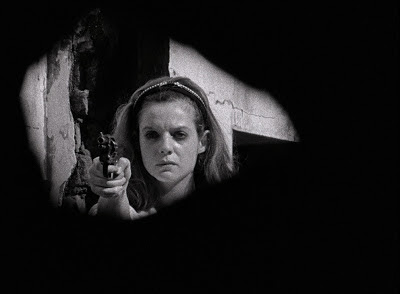
Much like the F.W. Murnau masterpiece of the same title, Miguel Gomes’ Tabu is a tale of paradises lost and found. Divided between present-day Portugal and Africa during the burgeoning uprisings of the 1950s, the film focuses on a woman named Aurora. In the present, she’s a doddering old lady, lonely and paranoid as she loses her life savings to a gambling addiction. In the past, she’s the radiant young wife of a successful colonial landowner in Africa, willing to throw it all away for a passionate love affair with a musician. Dreamy and sensual, this dialogue-free section is narrated by Aurora’s long-lost former lover, who sorrowfully recounts the passions that would destroy the pair. But beneath the doomed affair lies the threatening shadow of colonialist oppression, personal shame merging with public crime in a phantasmic vision of self-recrimination and horror. Sublime.
The Last Time I Saw Macao
During the question-and-answer session following The Last Time I Saw Macao, an audience member spoke what was on most of our minds and invoked the name of Chris Marker. High praise, to be sure, but it doesn’t quite capture the peculiarity of this B-movie documentary, to borrow a phrase from co-director Joao Pedro Rodrigues. In this distinctive hybrid film, Rodrigues’ directing partner Joao Rui Guerra da Mata is returning to the city of his past after decades of separation, eager to rediscover the city that has dwelled in his mind for so long. Yet what the pair finds is a world of glory and decay, lonely side streets and desolate buildings. Over top the images the filmmakers impose a lurid sci-fi radio play featuring a missing transvestite, a criminal kingpin named Madame Lobo, a handful of stray allusions to Josef Von Sternberg’s Macao, and a glowing birdcage that turns people into beasts. Fascinating as much for its low-budget formal ingenuity as its twisty narrative, the film plays with memory and fantasy in its efforts to recapture a city lost to time. What else can it finally do but blow it up? The city is gone. The city never was.
The Metamorphosis
The VIFF program guide name checks Guy Maddin for The Metamorphosis, and it’s hard to argue the point. Like the Canadian master, this South Korean short (directed by Yun Kinam) trades in silent film aesthetics, amped up to borderline camp—and it even has an absent father figure, as per Maddin, although daddy in this case is thrown out of the house for turning into a vampire and attacking his daughter/mime/whatever. Is it a tortured vision of domestic abuse and dysfunction, or a semi-coherent parade of hyper-stylized tropes stolen from the graveyard of film history? Well, it’s fun while it lasts, whatever the hell it is. Sadly, for all the dramatic posturing—Hans Zimmer’s score for The Dark Knight Rises sounds like the Beach Boys next to this film—the ending fizzles, with the film clumsily rushing headlong towards its conclusion.
Emperor Visits the Hell
Several chapters from the 16th century Chinese epic Journey to the West are reworked for modern times in Li Luo’s Emperor Visits the Hell, with mixed results. In a mere 67 minutes, Li unpacks a varied tale involving a pool-hall hustler who loses his head to a dream, forgery in the book of life, stray ghosts, and the emperor’s titular trip to deal with the ramifications of it all. Yet as fantastic as this all sounds, Li sticks to a deadpan realism. Hell is a room as bland as any other, while the gateway to the underworld is, amusingly enough, a non-descript bus stop. The mundane grounds the mythical, allowing the director to emphasize the satirical undertones of the story—it turns out even the emperor must learn to kowtow sometimes—rather than getting hung up on supernatural visions. Unfortunately, the narrative is stitched together with little picture-book interludes and climaxes with the lead actor drunkenly ranting at the wrap party, lending a haphazard air to what is otherwise a powerful concept.
Sunday, October 14, 2012
Vancouver International Film Festival 2012: Part Four
Walker
The audacity of Tsai Ming-Liang’s Walker lies in its simplicity. Lee Kang-Sheng, Tsai’s favourite actor, dons bright red monk robes and walks down the bustling streets of Hong Kong—but slowly, very slowly. Shots are held for minutes at a time, mirroring the glacial pace of our faux-monk friend, whose every step seems to occur in super slo-mo. At times, this short film resembles a kind of artful “Where’s Waldo?” as Tsai buries the monk deep inside the frame, forcing viewers to scan for that telltale splash of red. Other times he’s front and centre, standing in the middle of a busy street as onlookers gawk and snap photos (the crowd parts around the man, as if repelled by a force field). Either way, every shot is a living tableau, rich in detail and unexpected beauty in a cinematic experience of unparalleled purity.
No
Style and substance do battle for the heart of modern politics in Pablo Larrain’s No, and the results are about as shocking as an Iranian election. But more than a mordant political satire, Larrain’s retelling of the referendum that brought down Augusto Pinochet’s dictatorship is also a brisk, funny piece of high-powered filmmaking. Fortunately, even as he delivers his most mainstream work to date, the director remains his stubbornly eccentric self. The film’s washed-out video aesthetic is just as much a rejoinder to commercial slickness as it is a riff on the dated look of its 1980s setting. The decision to focus on the boldly irreverent advertising campaign against Pinochet yields much humour, while Gael Garcia Bernal’s conflicted adman provides the pathos. His haunted look at the end speaks to the powerful anxieties just beneath the surface of this otherwise jubilant tale. Once he sold freedom—now he sells soap operas.
Mother
First-time director Vorakorn Ruetaivanichkul (or Billy, if you prefer) looks to his own life for inspiration and settles squarely on his mother. No wonder—the woman seems on the verge of self-destructing, with a broken leg and weak kidneys hobbling her body while depression and kleptomania cripple her mind. Billy blends documentary footage of his family with fictional tangents, but the technique is mostly one of expediency (he wasn’t there to film his mother stealing from a grocery store, so he re-creates it with actors instead). Sadly, the jumble of reality and fiction leaves each scene unmoored. A painful sequence where the director captures his mother sobbing helplessly as someone off-camera browbeats the anguished woman over her failings is so isolated from the rest of the film that the powerful emotions stirred up are only muffled. The last thing we see is Billy’s message, “This is what I can do”—an admission of the film’s loving sincerity, as much as its own shortcomings.
Mekong Hotel
Most films from Apichatpong Weerasethakul feel like overgrown trees deep in the jungle, entangled in the surrounding world and teeming with life. Mekong Hotel, on the other hand, is more like a meagre sapling on a well-groomed lawn. That may be partly due to the film’s unusual origins: based on an old script, it forms the kernel of a larger project currently underway. Everything that you would expect of Apichatpong is here, from the familiar faces in the cast to the flattened mysticism of the story. Scenes of entrail-eating ghosts and thwarted love affairs mix with offhand moments from the film’s own creation, such as the soundtrack being recorded and the director advising his star to wear the tight pants. The director’s fascination with the hazy border between truth and fiction remains, but only in its most rudimentary form. At most, the film holds a passing interest as a sort of sketchbook, offering viewers little more than the unfinished doodles of a keen mind.
In Another Country
A typical Hong Sang-Soo interrogation of feckless masculinity gets a shot in the arm from a game Isabelle Huppert, providing a welcome dash of culture-clash comedy to In Another Country. That may sound unlikely at first—cultural differences are more often sources of lazy humour—but Hong’s eternal preoccupations ensure the film strays from the ordinary rather quickly. Huppert plays three different French women in South Korea alternately fending off or inviting the advances of the locals in an unending quest for some kind of happiness. The casual tone and goofy bonhomie belies Hong’s meticulous construction, which lays bare the unseen patterns that shape his character’s lives, for good and ill. With its intricate layers of interlaced fictions and dreams, all blurred together with constant repetition, the film could easily be mistaken for a surrealist comedy of manners akin to Luis Bunuel’s The Discreet Charm of the Bourgeoisie.
Subscribe to:
Posts (Atom)


