Showing posts with label george clooney. Show all posts

Wednesday, February 23, 2011

The Men Who Stare at Goats


If you take away the guns and bloodshed and all that, war is actually pretty funny. It’s really nothing more than people dressed strangely walking funny and falling over occasionally—a surefire recipe for hilarity, really, until someone loses an eye or a couple of cities or whatever. At any rate, that seems be to the idea behind the laboriously madcap military farce of The Men Who Stare at Goats. Based on the fact that the American military once experimented with training psychic soldiers, the film posits the New Earth Army, a top-secret squad led by a burnt-out Vietnam vet who tries to teach his men to love the Earth Mother and walk through walls. This is a tantalizing hook bearing little meat, so the film transposes all of the silliness onto present-day Iraq, where a journalist discovers a former member of the group on a super-secret mission. Are the psychics searching for WMDs? Trying to blow up Saddam Hussein through the sheer power of their minds? Hoping to bring peace to Middle East by projecting their mental auras of acidhead hippie love crap? The possibilities are endless, if fairly stupid.

But then, almost anything would be preferable to the aimless semi-comedy we get instead. Hopes for an absurdist satire of the Iraq war are quickly dashed by dud gags, like the bit where two rival security companies engage in a firefight while butting in line at the local gas station. Oh, those darned paramilitaries! Will they never learn? (Cue wacky music.) Now, I’ll grant you some of the performances are fine. George Clooney is amusingly deadpan while spouting the most inexplicable nonsense, and Jeff Bridges is appreciably Dude-like (on the other hand, Ewan McGregor is Ewan McGregor—take it or leave it). But the humour has little kick for such a loaded subject. Even while scoring lazy laughs at hippie nonsense, the film still makes a comic set piece out of a squad of soldiers tripping on acid and playing with flowers, as if this were the most subversive notion in the world and not just a 40-year-old clichĂ©. Military technology has advanced considerably in that time. One might have hoped that the American comedic arsenal had developed beyond the 1960s as well.

Sunday, January 10, 2010

Up in the Air


Up in the Air is the sort of film that diminishes the instant you leave the theatre. It makes no serious missteps, but only because it risks so very little. After it was finished, I felt a little resentful—am I really expected to believe that something so polished and bland is an example of quality filmmaking? I imagine it has already reserved a slot in some future Academy Awards montage, presumably one of those self-celebrations of Hollywood’s endless dedication to making pictures that expose the pressing social concerns of the day, as acted out by millionaires with strong jaw lines and good teeth.

Using timeliness as a dodge, the film evokes economic anxieties while avoiding any real stance or political outlook. Like a fog that descends upon viewers, the notion that this is a comment on the economic downturn obscures the fact that the only pressing social matter actually addressed by the film is whether or not George Clooney will ever settle down and have kids (millions of People and Us Weekly readers want to know).

As Ryan Bingham, a roving executioner brought in by firms too cowardly to lay off their own staff, Clooney is the usual smooth charm and fast talk. There are some laughs to be found in the banter and quips, but director Jason Reitman’s competent and unremarkable style is too glib to handle the more somber aspects of the film’s final third, as Ryan struggles with the emptiness of his lifestyle. The film moves with pep and does a good dance, but when it counts you realize you’ve put your money on a featherweight.

As Ryan tries to deal with his lack of emotional connection to other people, the film becomes a rather dull paean to the importance of family in these hard times. The film makes its point mostly through cheeky reversals, such as having the stridently anti-commitment Ryan coaching his sister’s nervous fiancĂ© on the virtues of marriage. Most depressingly, the film allows Ryan—supposedly alienated and emotionally isolated—to buy back his soul, rather than earn it, through a series of simple good-will gestures that cost him nothing yet leave him redeemed. No longer an angel of death, he now serenely floats above us, a benign, beatific presence or some such Hollywood plop.

In interviews with laid-off white-collar workers at the beginning and end of the film, Reitman ostensibly gives a voice to the unemployed, and yet denies them of anything to say beyond banalities. The opening montage is a collection of alternately angry and pitiful outbursts; the concluding is a feel-good homily to how wonderful it is to have a husband or wife to hug you when you’re laid off. Am I the only one disgusted at the thought of turning the unemployed into the chirping chorus of one rich guy’s mid-life crisis?

Cheer up, the film seems to say, unemployment isn’t bad, as long as you’ve got a family to care for you. (If you don’t, then I guess you’re fucked, but that’s not part of the script.) All you need is love, hocus pocus, happy times are here again. Personally, if I’m being asked to swallow this shit sandwich, I’d like a good dose of hot sauce. Can we get a little bit of rage here, please?

Friday, November 27, 2009

Fantastic Mr. Fox


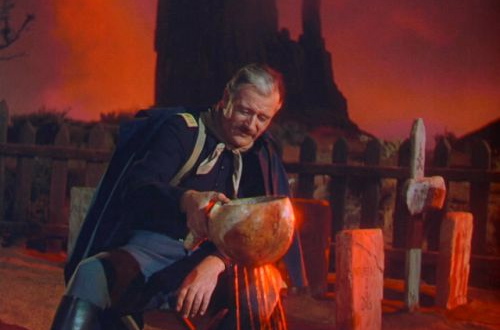
Before we get this bitch-fest started, let me be clear on one matter: Fantastic Mr. Fox is undoubtedly one of the loveliest films you will find playing in the multiplex during this grim season of gloomy Oscar-bait and gaudy holiday cash-ins. Wes Anderson, ever the playful stylist, has created an overstuffed toy box here, brimming with curious inventions and childish wonders. It’s hard not to succumb to the tactile delights of such first-rate stop-motion animation as you watch the fur on Mr. Fox’s face bristle, seemingly nudged by some modest breeze. Anderson’s characteristically flat images have rarely conveyed such a sense of abundance—a fair trade for visual depth, I suppose—and little jokes and details suggest a care and craft that exceeds the vast majority of animated films. Even the vivid autumnal colouring of the film is a satisfying pleasure in itself. (Such a rich confluence of reds, oranges, and browns probably hasn’t been seen on screens since She Wore a Yellow Ribbon.)

But even as I admired these exquisitely composed and executed visuals, I was unable to give myself over to the film’s enchantments. While certainly a step above the usual pop-culture-quoting crassness of most children’s animation these days, the film still indulges in self-conscious gestures that continually break the spell and undermine attempts to build up an enveloping world. Annoying meta-conversations about Mr. Fox’s trademark whistle—itself a fairly irritating flourish—take the viewer out of the story and into a realm of self-commentary the film has no real interest in pursuing. Similarly, the gesture of showing Mr. Fox turning on the little radio on his belt as a cue for the soundtrack is another unfortunate incident of the film giving into self-awareness. Besides, how distracting is it to hear the Rolling Stones’ “Street Fighting Man” in a rural fable?

Equally disruptive, as Deborah Ross points out in this review, is the use of celebrity voices—a charge I would love to see leveled against more of these star-studded animated films. You can really feel how damaging this tactic can be every time the fox family got together—all I could see were the faces of George Clooney and Meryl Streep and Jason Schwartzman in front of a bunch of microphones somewhere. Even though the performances are fairly satisfying, the celebrity wattage proves detrimental to creating fully realized characters. It was really only characters voiced by unfamiliar names—Eric Anderson’s Kristofferson, Wally Wolodarsky’s Kylie—that truly seemed to belong to the world of the film. By contrast, Clooney's Mr. Fox seemed to hover somewhere just outside this carefully constructed reality.

However, the most significant problem with Fantastic Mr. Fox lies in the script itself—another typical Anderson concoction of neurotic sons craving validation and reckless fathers struggling with responsibility. Once again, we are forced to confront the problem of Wes Anderson himself, a surely talented filmmaker who routinely frustrates and disappoints.

Now, I don’t want to criticize Anderson just for returning to these familiar characters and plots again and again. The family tensions he addresses are timeless, and in theory there is nothing wrong with returning to the same theme if you can justify it. Most great subjects not only reward repeated examination, but in fact demand it. Consider Yasujiro Ozu, who made the family his great theme. His Late Spring follows a woman struggling with the dilemma of marrying and abandoning her aging, lonely father. Later, in An Autumn Afternoon, Ozu essentially retells this story, shifting the emphasis to the father's perspective. Both films are extremely similar in terms of plot, but each one takes on a very different mood—the daughter’s version being more hopeful, the father’s more melancholy.

No one would accuse Ozu of being a weak filmmaker just because he rarely strayed from this terrain, and yet Anderson’s recurring familial obsessions feel like a weakness, not a sign of a singular, brilliant vision. He simply doesn’t bring enough insight to his repetitions. While an artist like Ozu could bring out new depths in stories that are essentially the same, Anderson has resorted to hiding his unimaginative tales behind surface distractions (first an aquatic adventure, then an Indian excursion, now a foxy fable). Why not, for example, try telling one of his neurotic family tales from the perspective of one of his mother figures, and reinvigorate his usual father-son conflicts? Because the mother is always relegated to the background, or altogether absent, leaving us with the same sons and fathers playing out the same dramas.

So all we have here is a visually rich and thematically poor film, and it seems like a damn shame. In Anderson’s world, there isn’t a family conflict that can’t be resolved by simply having everyone break out into dance as the camera pulls back and the film ends (this abused flourish feeling increasingly like a retreat from all the problems Anderson can't address). The cracks in the script are plastered over with a lot of sentimental goop about respecting differences and acknowledging our own animal natures, which sounds lovely except that’s what the problem was in the first place. Fantastic Mr. Fox is at best like a pleasant walk on an autumn afternoon—you see some pretty colours and nice sights, and then end up back where you began, a little rosy cheeked perhaps but otherwise unaffected.